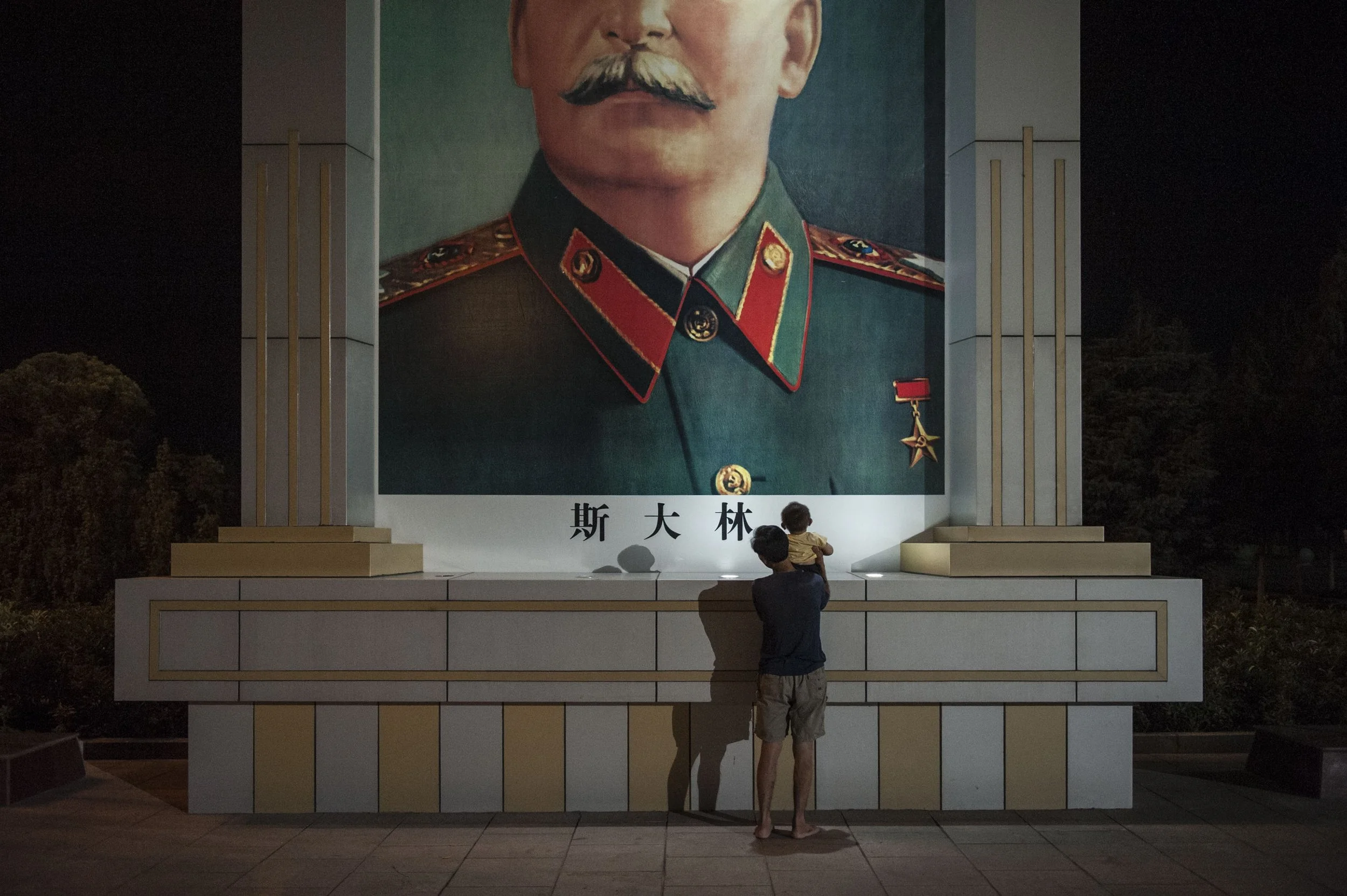
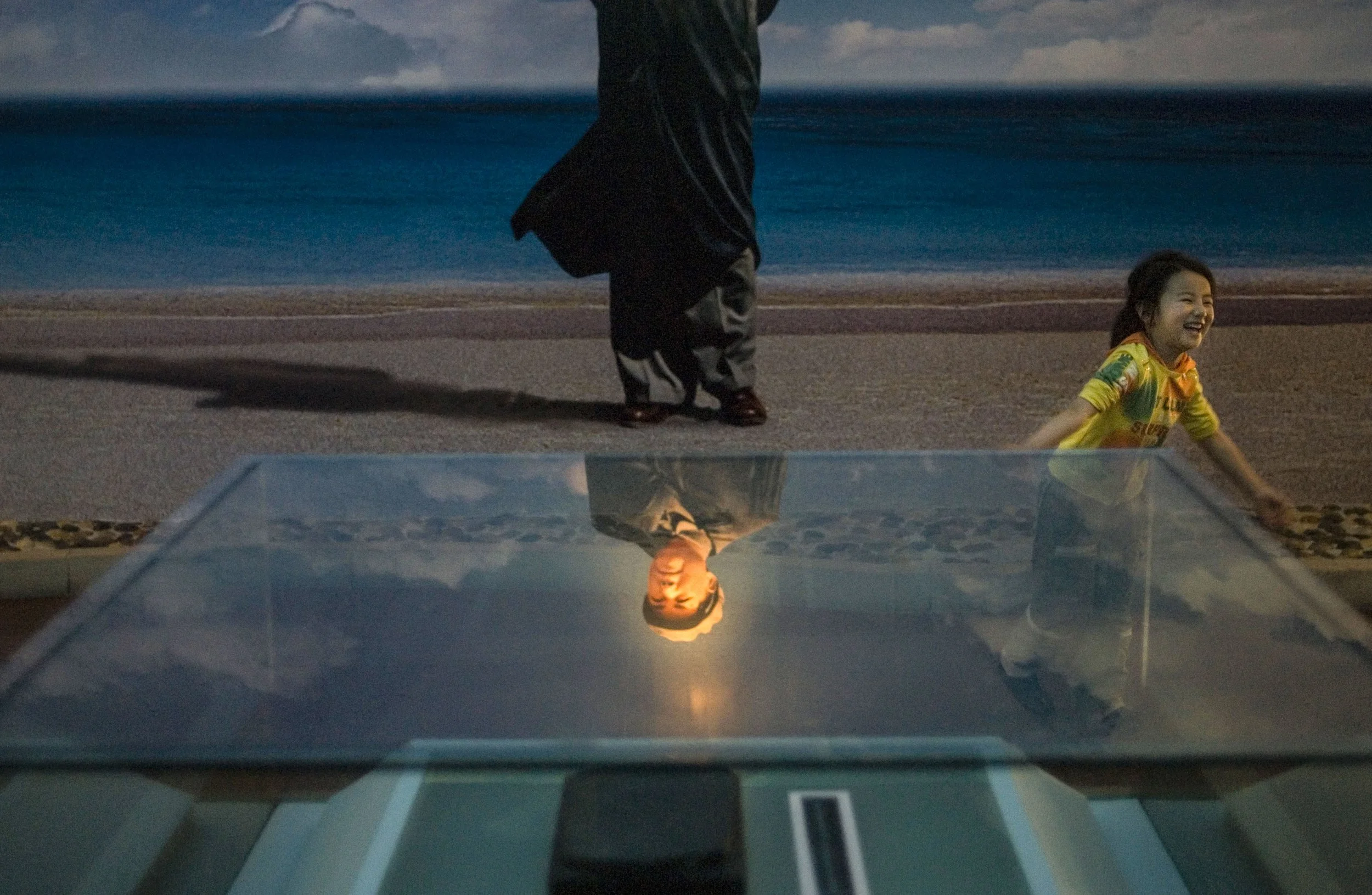
The 100th anniversary of the Chinese Communist Party has been a unique opportunity to step-up propaganda, put the party back into the people’s lives while celebrating its extraordinary resilience, making it the longest governing communist party in history. As a result, historic revolutionary sites have seen a surge in visitors.
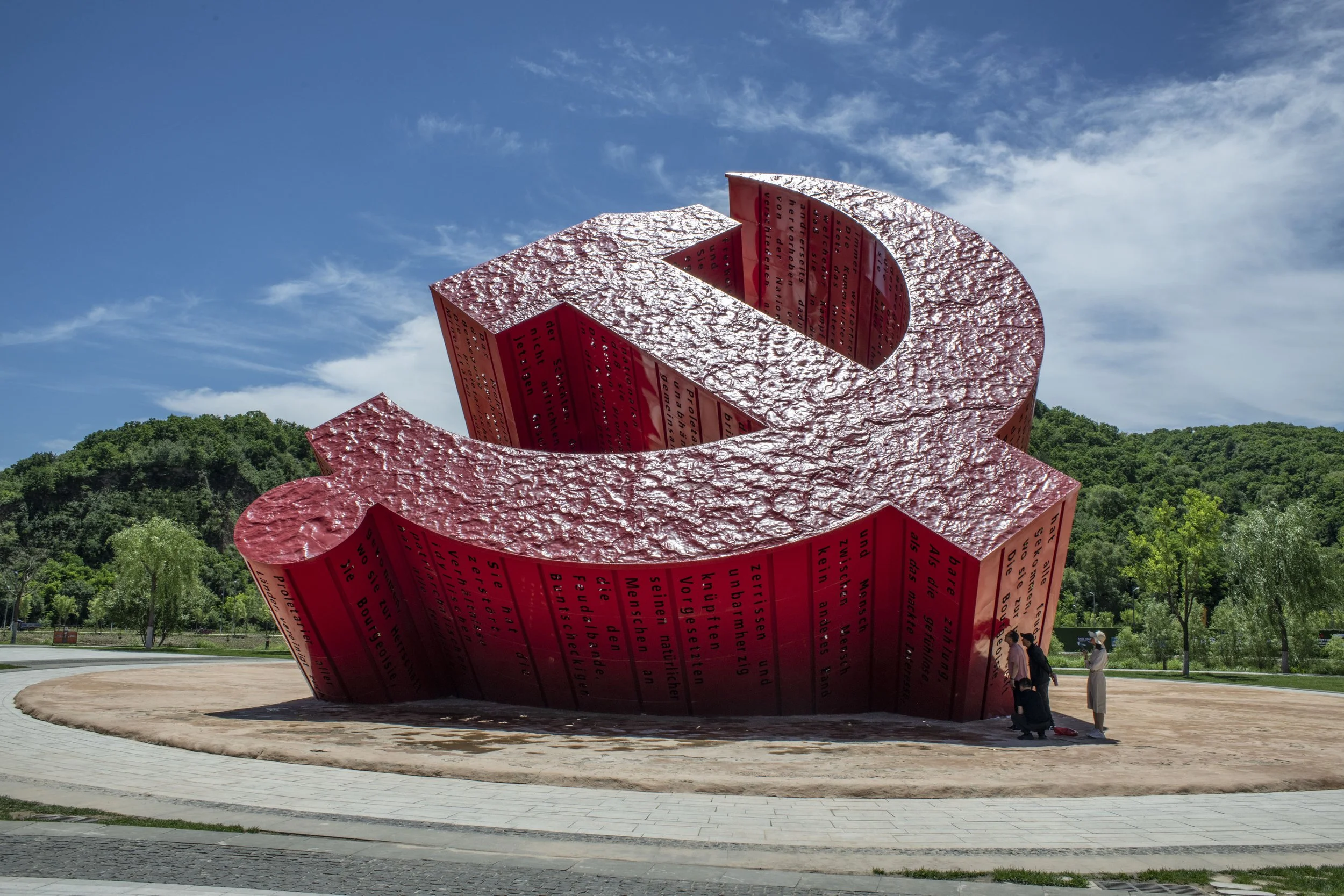
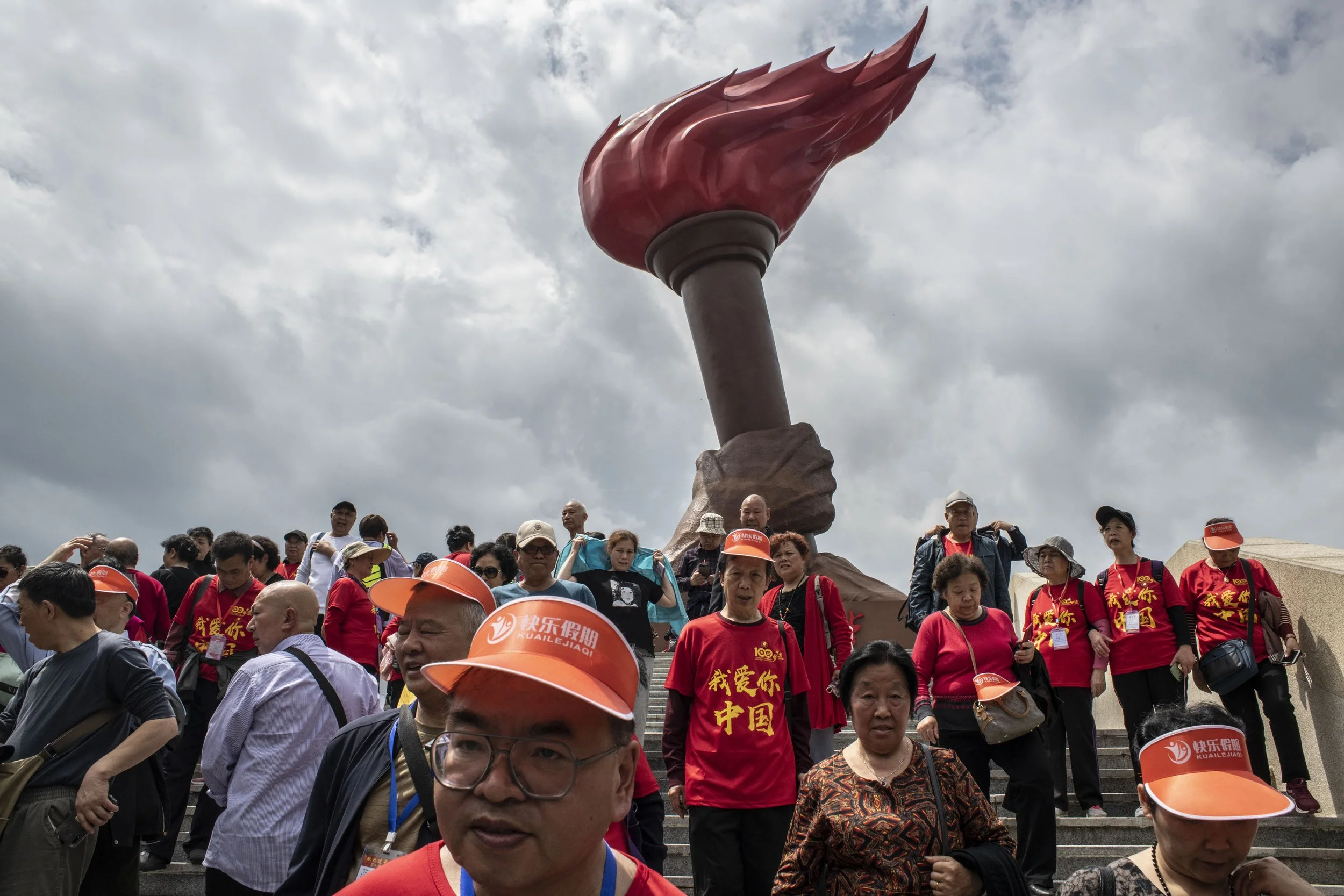
Tourists by a giant sculpture of a hammer and sickle in Nanniwan, a historical place immortalized with one of the most popular of all Chinese revolutionary songs. This sculpture, a magnet for selfies, is a recent addition to the site. Millions of dollars have been invested to try and make revolutionary sites more attractive.
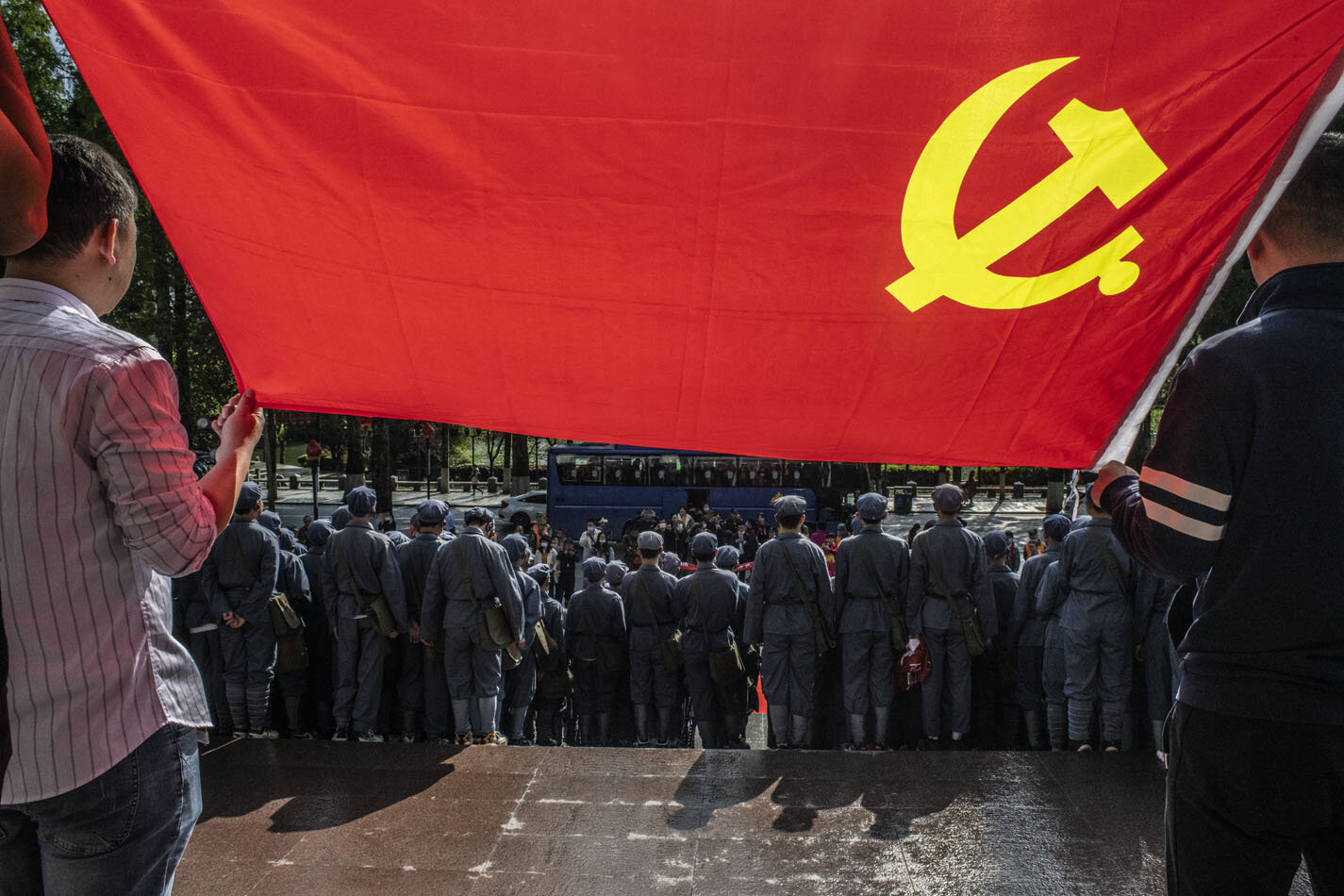
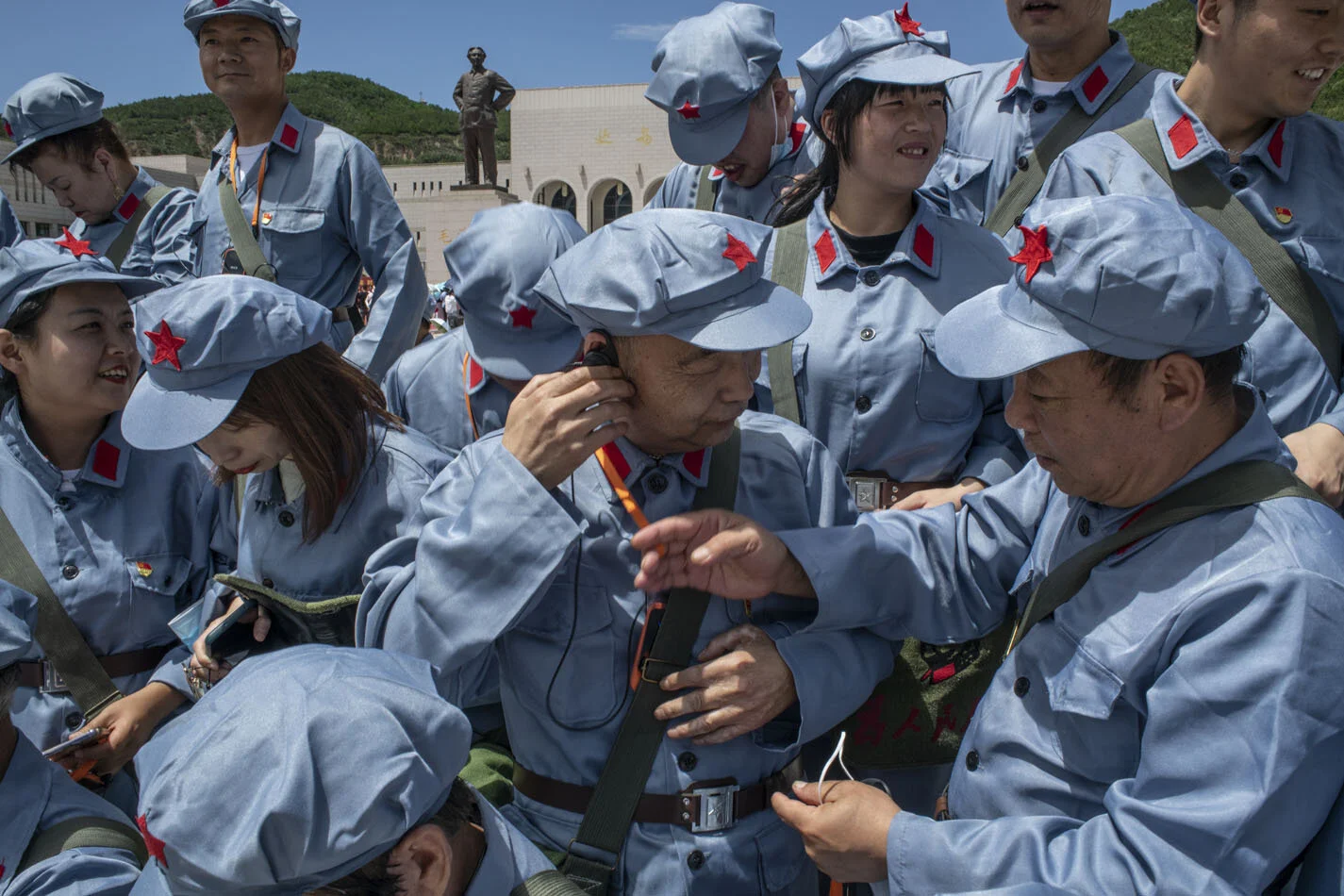
A group of tourists dressed as red Army soldiers pose for a group photo with the Communist Party flag on the steps of the Revolution Museum.
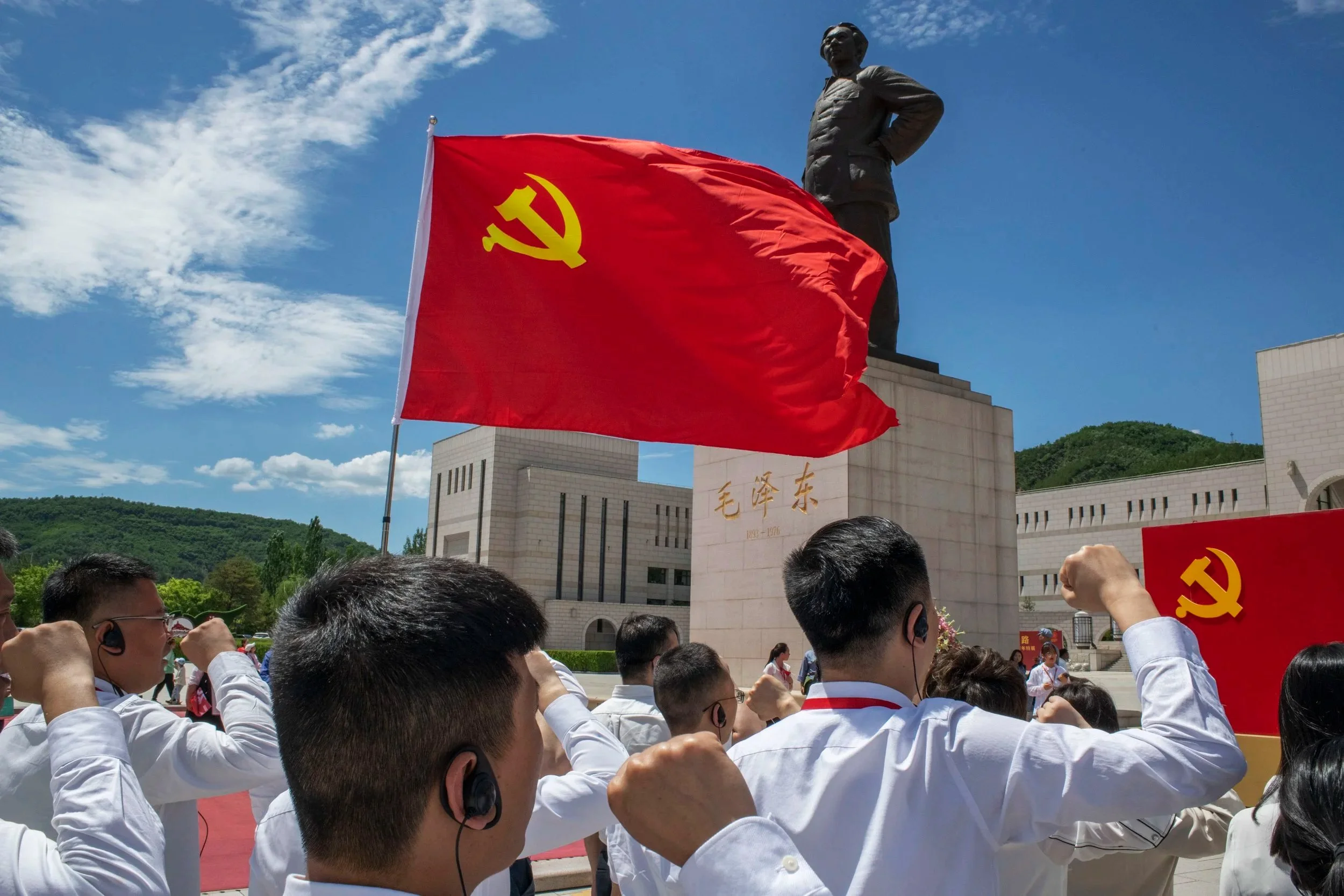
At Yan’an Revolutionary Memorial Hall, visitors on a company tour reciting the oath of allegiance to the Communist Party. “It is my will to join the Communist Party of China, uphold the Party's program, observe the provisions of the Party Constitution, fulfill a Party member's duties, carry out the Party's decisions, strictly observe Party discipline, guard Party secrets, be loyal to the Party, work hard, fight for communism throughout my life, be ready at all times to sacrifice my all for the Party and the people, and never betray the Party.” A large part of visitors to “red tourism” sites are part of company trips. For decades, the party was not very active in businesses and enterprises. The governance of Xi Jinping has changed that. It is now compulsory for all companies to harbor communist units to "carry out the activities of the party," and to provide "necessary conditions" for these units to function. It is particularly active in the human resources department.
Leftover from a dinner in a restaurant decorated with large poster of Mao in Jinggangshan where the Red Army was created. Red tourism trips are not necessarily austere lessons of propaganda. For many visitors it is also a great opportunity to feast and drink.
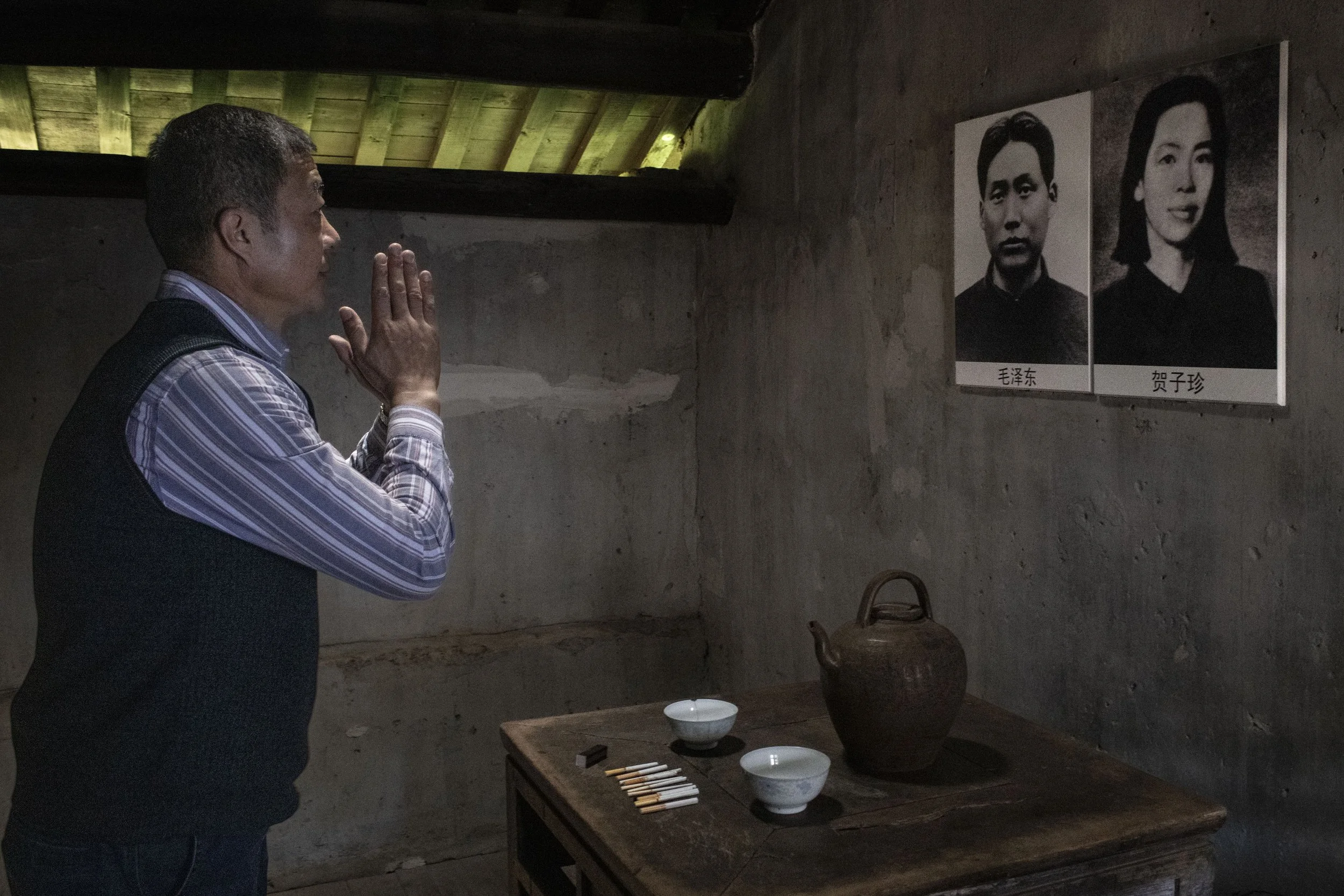
A tourist making an offering of a cigarette in front of a photo of Mao and his second wife Yang Kaihui, the leader’s former home in Maoping village near Jinggangshan. In spite of its misdeeds, hardly addressed in official history books, Mao has become a God-like figure and his revered as such by numerous Chinese.
Paper cuts of Mao and Xi Jinping at a souvenir store of the newly opened Wanda red themed entertainment park, in Yan’an. A personality cult, much like that of Mao, is being organised around Xi Jinping as the Chinese president is likely to extend its leadership beyond his two five-year term. The first Chinese president to so since the death of Mao.
Tourists, dressed up as Red Army soldiers, in the lobby of a hotel, get ready for a day of sightseeing in Jinggangshan.
A tourist dressed as a Red Army soldier taking a pose in front of a statue of a revolutionary soldier. “Remember where you come from” is one of the main slogans for the centennial of the CCP. It aims at keeping the revolutionary spirit alive, reminding supporters that the “struggle” is never over, at a time when the country newfound wealth could hamper militance.
Member of a “red tourism tour” dressed as red army soldiers get ready for a souvenir photo near a statue of Mao in Yan’an.
Children on a school trip, dressed up as Red Army soldiers in front of a statue of Mao with general Zhu De at the Revolution Museum in Yan’an. Visits to revolutionary sites is part of the curriculum for school kids of all ages. Xi Jinping has said revolutionary education should start with babies, “so that the ‘red gene’ can penetrate into their blood and hearts, and guide the young people to establish a correct outlook on the world.”
Tourists dressed as Red Army soldiers on a “red” sightseeing tour in Jingganshan. Ahead of the the CCP 100th anniversary celebrations, millions of dollars have been invested for a facelift of “red toursim” sites and make them more fit to the demands of modern days tourists. Here, a heart-shaped corridor of plastic flowers has been set-up for selfies.
Audience and actors at a show about the revolution at the newly opened Wanda red themed entertainment park in Yan’an. Modern theatrical shows offering an immersive experience are part of the modernization of red tourism sites, intended to attract more tourists and fuel party devotion.
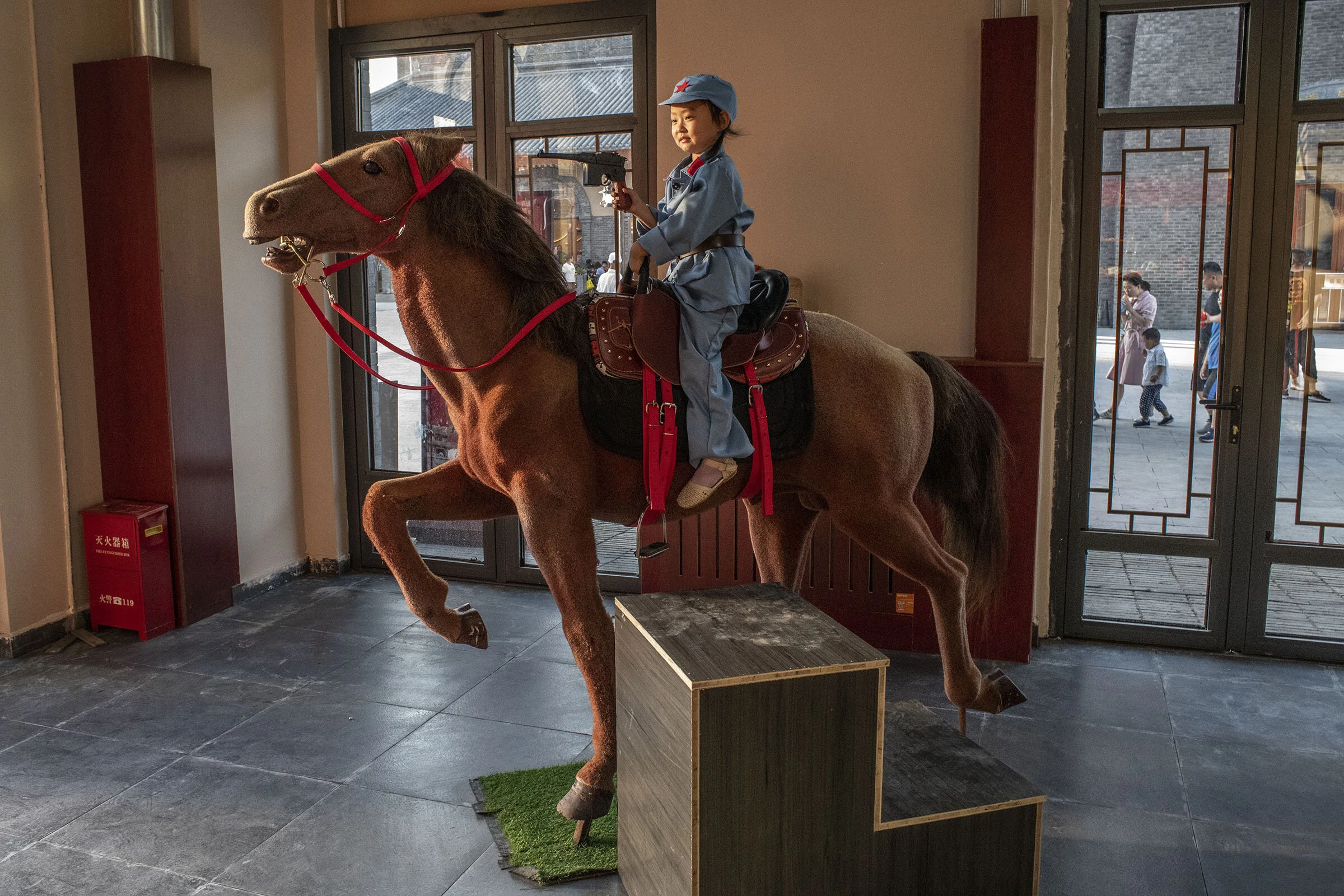
At a photo studio of the newly opened Wanda red themed entertainment park in Yan’an a young girl posing as a red army soldier.
A young pioneer preparing for a historical propaganda video shoot in Zhou En Lai former bedroom in Yan’an. The history told at red tourism sites has been expurged from its most controversial aspects. The bloody purges that helped Mao consolidate its power are invisible in Yan’an where they took place. “History is at the core of propaganda in China. It’s vital for the party that people feel an emotional connection to that history, and you’re only going to get that on the ground.” says Richard Mc Greggor the author of a book on the CCP.
At the newly opened Wanda red themed entertainment park, actors and extras, sing and wave flags for the shoot of a promotional video for the park at the occasion of the 100th anniversary of the party.
People at a mall where a large electronic billboard is displaying propaganda at the occasion of the 100th anniversary of the Communist Party of China. “The journey of a 100 years is magnificent and the heart is strong at the beginning of another 100 years”.